01
Grip rails and recessed profiles
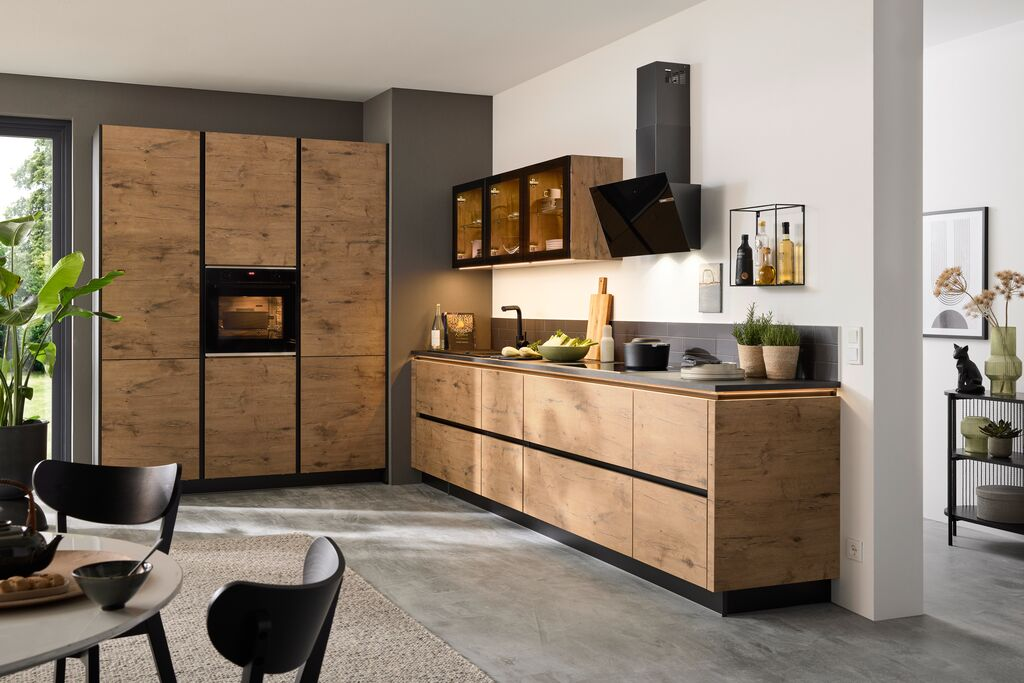
The most familiar German handleless system uses a recessed rail behind a shortened door or drawer front. Fingers reach into the profile to open the cabinet. The rail can match the fronts or create a deliberate contrast, and it establishes strong horizontal lines across the room.
02
Push-to-open fronts
A push-to-open cabinet has no visible gripping point. Pressing the front releases a mechanical or powered catch. It creates the purest appearance, although fingerprints, adjustment and appliance compatibility should be considered before using it everywhere.
03
Practical advantages
Without projecting handles, narrow aisles feel less cluttered and clothing is less likely to catch. Flat fronts are straightforward to wipe, while the grip channel itself needs occasional cleaning. The consistent lines suit compact kitchens as well as large open-plan rooms.
04
Appliances and tall cabinets
Dishwashers, fridge freezers and tall doors need the correct opening solution. Some appliances use a rail, some need a discreet handle, and others support push or powered opening. These decisions should be resolved before ordering rather than improvised during fitting.
05
Will handleless suit an older home?
Yes. Contrast can be effective: clean cabinetry can sit comfortably against original cornicing, timber floors and stone walls. The material and colour determine whether the result feels stark or warm. Timber, soft matt fronts and considered lighting can soften the geometry.