01
Put useful things within reach
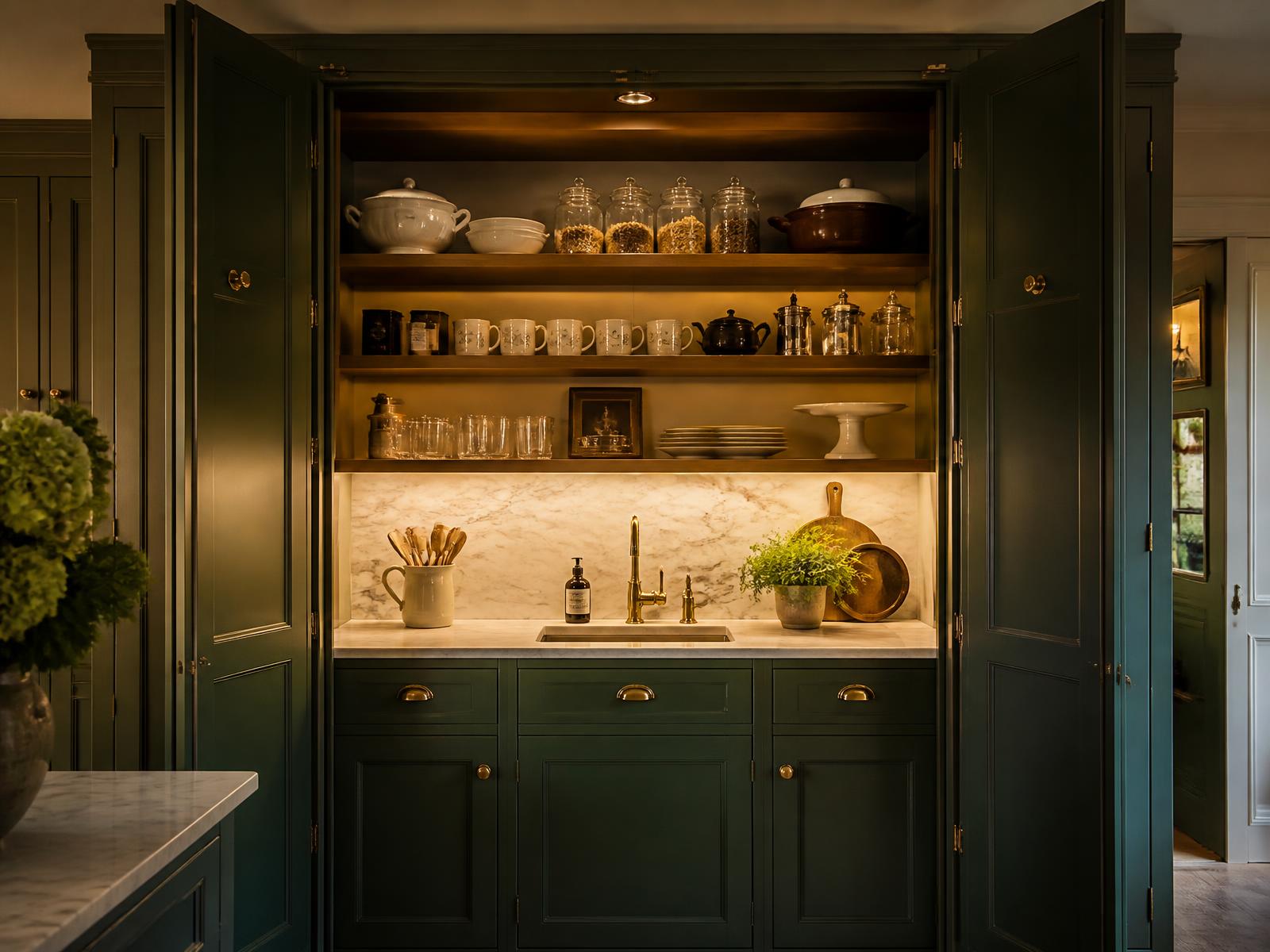
Begin with items that genuinely belong near the shelf: everyday bowls, mugs, glasses, cookbooks or jars. Frequently used pieces stay cleaner because they are moved and washed regularly. Less practical decoration can sit higher.
02
Create rhythm, not symmetry
Repeat a few materials or colours across the shelf without making both sides identical. A stack of plates, a taller jug and a low bowl create varied heights. Leave open space around groups so each arrangement can be read clearly.
03
Choose a restrained palette
Timber, stoneware, clear glass and aged metal sit naturally in both German and handmade kitchens. Scottish pottery, a woven textile or a few well-chosen cookbooks can give the display a sense of place without turning it into a theme.
04
Use lighting carefully
An integrated warm light can make shelving practical after dark and bring depth to a pantry or dresser. The source should be concealed and the colour consistent with the rest of the kitchen lighting.
05
Know where shelves do not work
Open shelves beside a frying zone collect grease and need frequent cleaning. Very deep shelves encourage clutter, while high shelves can become purely decorative. Closed storage remains the better choice for mismatched packets, small appliances and rarely used equipment.